
Very Cool Things to Know About Allium
Ecology
Historical Link to the Underground Railroad
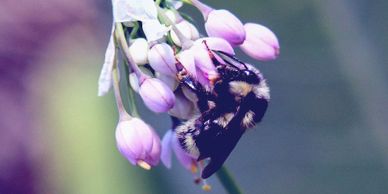
Allium cernuum is a native wild onion that thrives in deciduous woodlands, open grasslands & rocky ledges in most parts of the country.
Bulbs are used by bear and ground squirrels, while elk and deer graze on early spring greens.
Nectar producing flowers attract butterflies, hummingbirds and is a larval host for the Hairstreak butterfly. According to Xerces, it offers special value for native bees (especially the small ones!) & supports conservation biological control; predatory insects to help manage garden pests.
Photo credit: Creative Commons. Bombus on Allium cernuum by Chloe and Trevor Van Loon.
Historical Link to the Underground Railroad
Historical Link to the Underground Railroad

The pungent odor of Allium vineale repelled insects while working in the field & was used to mask traveler’s scents from dogs along the Underground Railroad. This wild onion species was introduced from Europe and is now considered an invasive weed across much of the eastern half of the country.
Onions also offered nourishment as part of dinner meals in cotton fields during long days of hard work.
"When us was in de fiel’ two women ud come at dinner time wid basket filled with hot pone, baked taters, corn roasted in de shucks, onion, fried squash, an b’iled pork.”
- Charlie Davenport, field slave in Second Creek Mississippi.
Historical Foodways
.jpg/:/cr=t:0%25,l:0%25,w:100%25,h:100%25/rs=w:388,cg:true)
Southeastern tribes, including Cherokee, enjoyed Allium cernuum as part of their spring diet. (Powerful medicine, take caution around consuming.) This wild onion species is indigenous to both the Appalachian and Rocky Mountains.
Aunt Clara Brown’s father is Cherokee, and it is likely she would have known to forage this wild onion when she arrived in the west.
Well-loved Allium tricoccum (Ramps, Ramson, Wild leek or Wood leek) are historically consumed across the east by indigenous populations including Cherokee.
Celebrated in contemporary cuisine, they are currently being over-harvested, depleting native populations. Slow growing, we encourage the restoration of this culinary delight.
Photo credit: Creative Commons, Allium cernuum by Patrick Alexander, Las Cruces NN.
Wise Woman Traditions
Allium in the Stiles Heritage Gardens

Culinary Plant Families
GARLIC – ONIONS – SHALLOTS – GREEN ONION – CHIVE
The onion most of us cook with is Allium cepa, indigenous to the Central Asian Steppe. Well adapted to the Rocky Mountain Steppe, it thrives in steppe-like urban spaces.
Red onion is dominant in African American culinary traditions; it’s not as sweet. Unlock the super-powerful anti-oxidant potential by letting onions rest 15 minutes after cutting. The pre-biotic fibers feed the pro-biotic microbes in our gut to help quell inflammation, so the medicine within the food is consumed on a regular basis.
Deep dive into the wise woman traditions practiced by the Five Points herbalist, Asia Dorsey
Allium in the Stiles Heritage Gardens
Allium in the Stiles Heritage Gardens
Allium in the Stiles Heritage Gardens
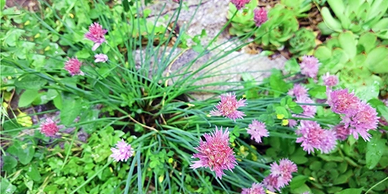
Perennial chives and garlic chives are culinary herbs that thrive in urban spaces. Drought tolerant, they can grow in full sun to mostly shade, they can take up a small footprint or can fill in an area while remaining relatively short as a border to a layered garden.
They offer early summer pollinator support and a nutrient dense addition for human meals; we particularly like to use the flowers to garnish salads and other delicate summer fare. Both chive varieties are easy to grow from seed. Simply sow on open ground, cover to the depth of the seed and water regularly until they become established. You can identify them by their onion-like smell!
Photo credit: Lee Lee, Allium schoenoprasum (common chives) blooming in the Stiles Heritage Gardens.
Support the Seeds
Allium in the Stiles Heritage Gardens
Allium in the Stiles Heritage Gardens
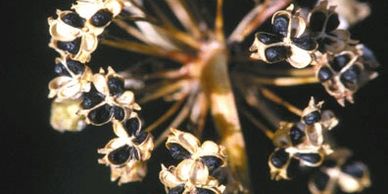
Native Allium cernuum thrives in rocky outcroppings, which is similar to the concrete ledges of urban spaces. The seeds of native allium need to be scarified; scratch seeds between two layers of rough sandpaper.
The seeds germinate better when exposed to the cold of winter. Water young plants once a week (if moisture does not fall from the sky) for the first year.
Plants should thrive on their own with no added water once established. They are short plants, growing 1-3’ high.
Be sure to pass on seeds to neighbors and loved ones to cultivate in their home gardens!